
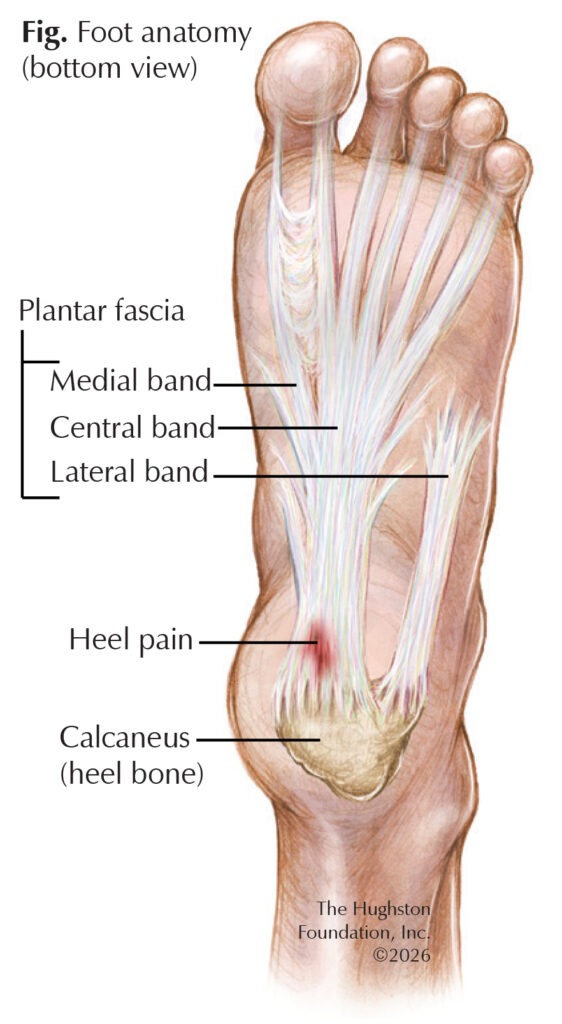
Plantar fasciitis is one of the most common causes of heel pain and can affect individuals of all activity levels. It occurs when the plantar fascia, a thick band of connective tissue that runs along the bottom of the foot from the heel to the toes, becomes irritated (Fig.). This tissue plays an important role in supporting the arch of the foot and absorbing shock during walking and running. When exposed to repeated stress, small tears can develop, leading to pain and stiffness. Although the name suggests inflammation, plantar fasciitis often results from long-term wear and degeneration of the tissue rather than acute inflammation.
 Risk factors
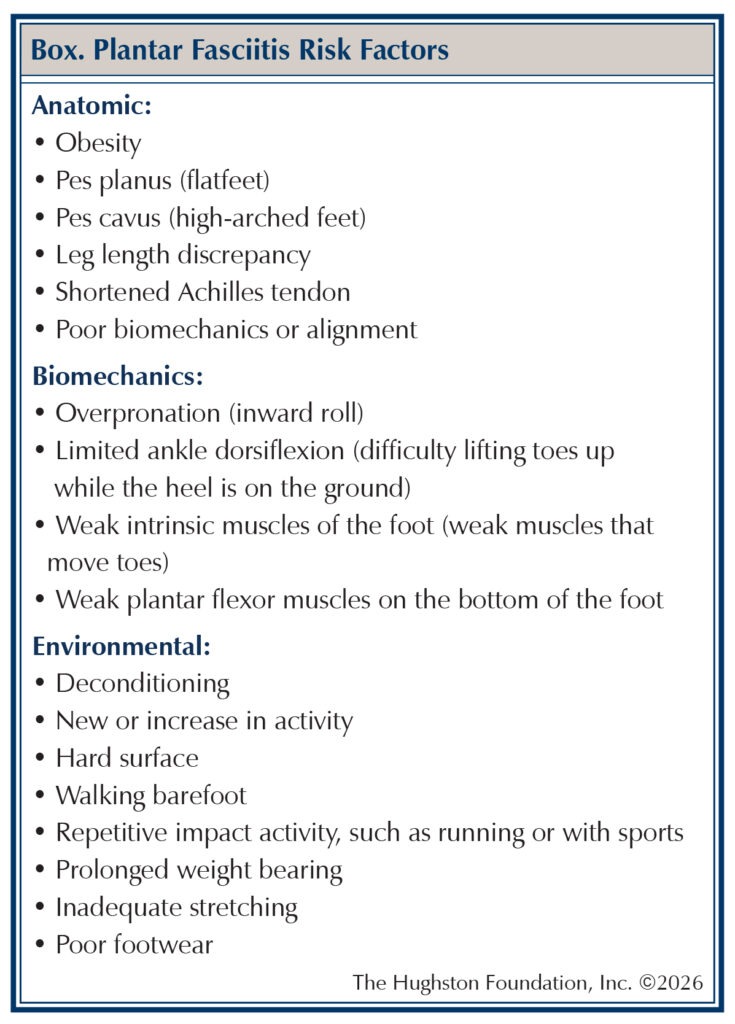
Plantar fasciitis often impacts adults between the ages of 40 and 60, although younger individuals, especially athletes, can also develop the condition (Box).1 People who spend long hours on their feet, such as healthcare workers, teachers, and retail employees, are at a higher risk because of repetitive stress placed on the heel. High-impact activities, like running and jumping, can increase strain on the plantar fascia. Additionally, individuals with certain foot structures, such as flat feet or high arches, experience uneven weight distribution, which places added tension on the tissue. Tight calf muscles can further limit ankle movement and increase stress on the plantar fascia. Obesity is another important risk factor, as excess body weight increases the mechanical load on the foot.1,2
Symptoms
The symptoms of plantar fasciitis typically develop gradually rather than after an injury. Patients complain of a sharp, stabbing pain at the bottom of the heel that occurs during the first steps in the morning or after periods of rest, a phenomenon sometimes called “first-step pain.” As the foot warms up with movement, the pain improves; however, it often returns after prolonged standing or activity. Some patients also report foot stiffness or discomfort that worsens by the end of the day. In most cases, the condition affects only 1 foot, although both feet can be involved.2,3
Diagnosis
Physicians diagnose plantar fasciitis during a clinical visit after discussing the patient’s symptoms and performing a physical examination. During the evaluation, an orthopaedist assesses the location of pain and applies pressure on the heel to identify tenderness. The physician may also stretch the foot and ankle to evaluate tightness in the plantar fascia and surrounding structures. In most cases, imaging is not required, but the doctor can order an x-ray or ultrasound to rule out other conditions, such as a stress fracture, heel spurs, or nerve-related pain.
Treatment
The majority of patients improve with conservative, nonsurgical treatments. Initial management focuses on reducing stress on the plantar fascia and allowing the tissue to heal. Physicians often advise patients to rest and limit activities that worsen the pain. Applying ice and taking over-the-counter medications, such as ibuprofen, can relieve symptoms and help reduce discomfort. Stretching exercises targeting the plantar fascia and calf muscles are especially important, as they improve flexibility and reduce tension on the heel. Wearing supportive footwear is essential, and some patients benefit from orthotics, which are shoe inserts designed to support the arch and improve foot alignment. In certain cases, the doctor may recommend night splints to keep the foot in a stretched position during sleep.1
If symptoms do not improve with initial treatment, additional options may be considered. Physical therapy can help strengthen the muscles of the foot and lower leg while improving flexibility. Corticosteroid injections can treat inflammation and reduce pain in more severe cases. Another option is extracorporeal shockwave therapy, which uses sound waves to stimulate healing of the affected tissue. Most patients do not require surgery; however, if symptoms persist despite months of conservative treatment, the physician may recommend surgery.1,2
Take the first step toward relief
The overall outlook for plantar fasciitis is very positive. Approximately 80% to 90% of patients experience significant improvement within 12 months of starting treatment, though recovery can take time.1 Symptoms may fluctuate during the healing process, and patients are often encouraged to modify their activities during this period, particularly avoiding high-impact exercise that may worsen symptoms.
Preventing plantar fasciitis involves reducing stress on the feet and maintaining overall foot health. Wearing supportive, well-fitting shoes during exercise or prolonged standing is essential. Regular stretching of the calf muscles and plantar fascia can improve flexibility and reduce strain. Maintaining a healthy weight can also reduce pressure on the feet, and gradually increasing activity can help prevent overuse injuries.1
Although plantar fasciitis can be painful and frustrating, it often improves with time and proper care. Recognizing the symptoms early and reducing strain on the plantar fascia can help prevent the condition from worsening. With appropriate treatment and lifestyle adjustments, most patients can return to their normal activity and remain pain free.
Author: Kha Minh Kami P. Nguyen, MSE | Columbus, Georgia
References:
- Koc TA Jr, Bise CG, Neville C, et al. Heel pain – plantar fasciitis: revision 2023. Journal of Orthopaedic & Sports Physical Therapy. 2023;53(12):CPG1-CPG39.
- Buchanan BK, Kushner D. Plantar fasciitis. In: StatPearls. StatPearls Publishing; 2024.
- Trojian T, Tucker AK. Plantar fasciitis. American Family Physician. 2019;99(12):744-750.
Last edited on September 25, 2026