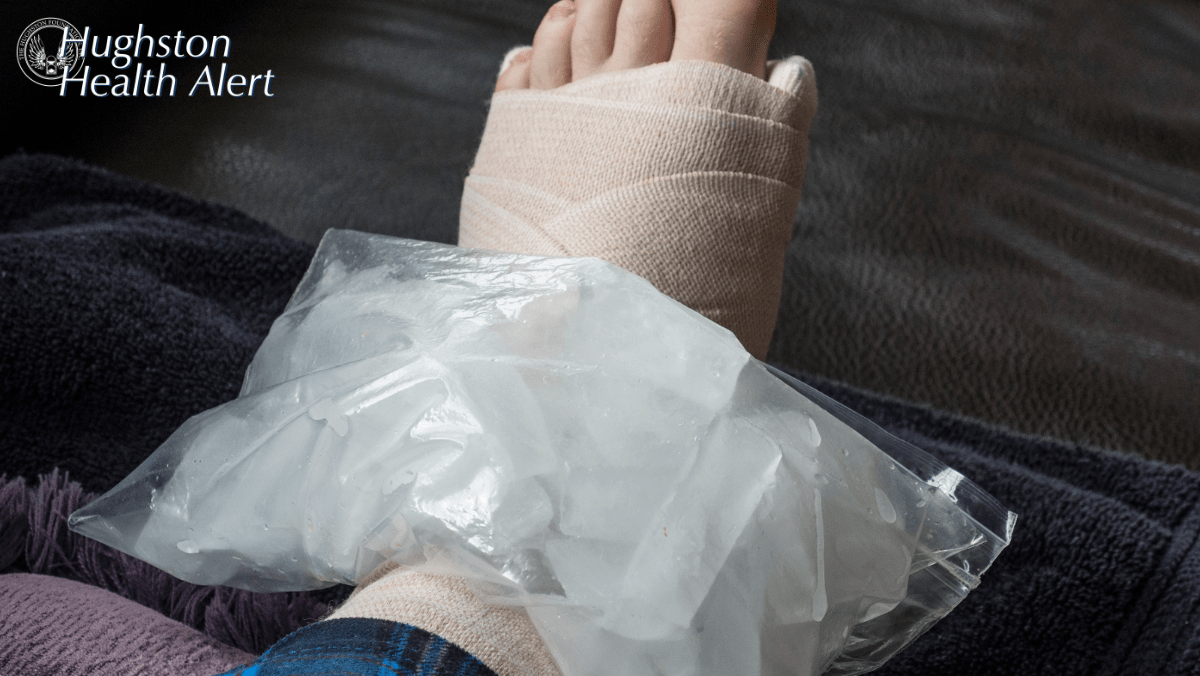
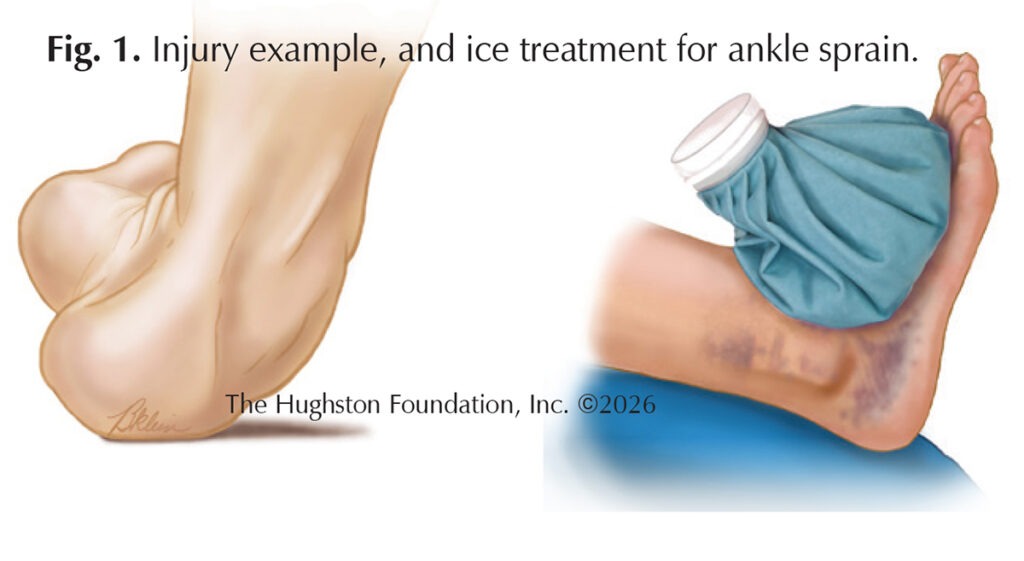
Contrast therapy, also called hot-cold immersion therapy, involves alternating bodily exposure to heat and cold, such as sauna, steam room, ice bath, cold plunge, etc. Historically, contrast therapy has been used in the treatment of injuries, for example, alternating between a heating pad and ice to treat muscle strains or ankle sprains (Fig.1). More recently though, there has been a focus on contrast therapy as a means to aid in post-exercise recovery, especially in high-level athletes. Social media has also popularized sauna and cold plunge therapy as a way to promote mental health, energize the body, burn fat, and increase overall health and wellness.
Did you know that variations of contrast therapy have been used for centuries? It’s true! Daily sauna use is a staple of Nordic and Finnish populations, and countries with colder climates, such as Iceland, have long-used cold-water immersion in their daily routine. Even Japan integrated natural hot spring use into its culture thousands of years ago.
How does it work?
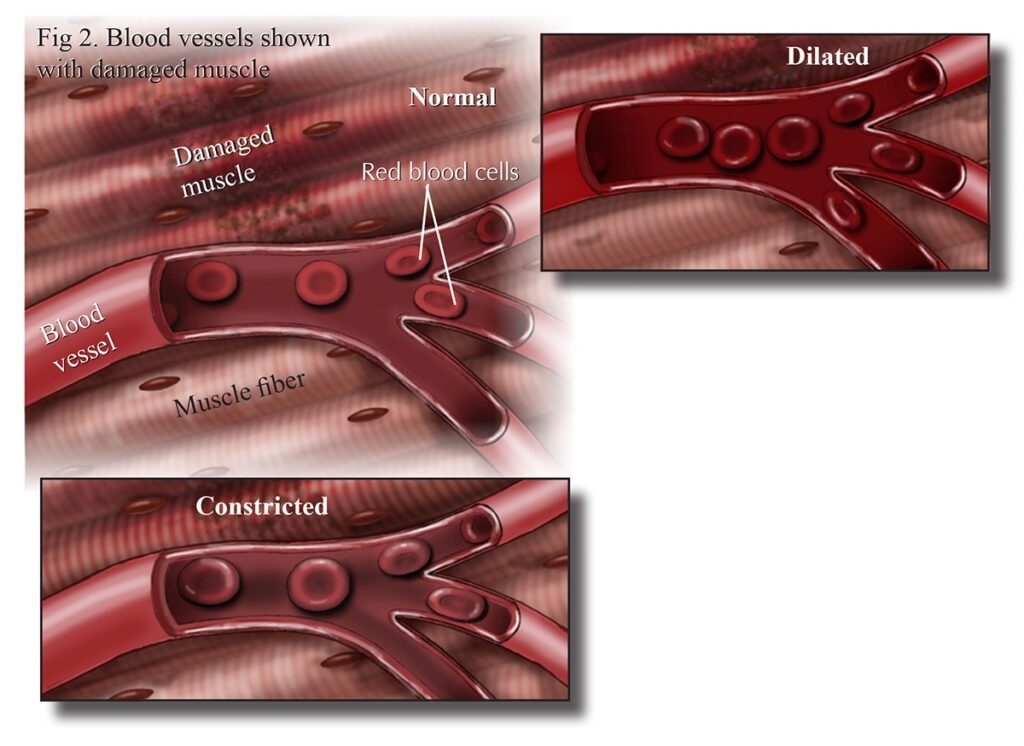
The biology behind contrast therapy is fairly simple. Exposure to heat causes blood vessels to dilate (enlarge); whereas, exposure to cold causes blood vessels to constrict (narrow). This cycle of blood vessel dilation and constriction promotes the body’s normal healing and recovery processes. More specifically, blood vessel dilation increases blood flow to the skin and muscles. Red blood cells carry oxygen as they travel, allowing muscles to replenish their oxygen stores and recover at a faster rate (Fig. 2). Additionally, exposure to heat promotes sweating, which is one of the body’s natural ways of eliminating toxins. Finally, exposure to heat can promote muscle relaxation and inhibit muscle spasms, allowing you and your muscles to relax following strenuous exercise.
On the other hand, exposure to cold and subsequent blood vessel constriction decreases blood flow to the muscles and skin, and instead directs it to the most vital organs, such as the heart and brain. Cold also stimulates the central nervous system, which over time can reinforce the body’s immune systems. This combination of directed blood flow to the brain and nervous system stimulation also facilitates alertness, mental sharpness, and feelings of clarity, which are 3 of the most common advertised benefits of popularized cold plunges. Finally, as you stress your body during exercise, your immune system generates inflammation in the joints and muscles. Exposure to cold combats this inflammation and swelling, reducing joint pain and muscle fatigue.
Is it right for you?
First, you need to recognize that contrast therapy is a form of working out. It stimulates the body to produce certain responses, but without the mechanical stress of lifting weights or going for a run, for example. Overall, contrast therapy can be a great natural therapy as long as you use it safely.
Contrast therapy exists on a spectrum of both temperature and time of exposure. As with any new workout, it’s important to start small and work your way up. In this case, start with more mild hot and cold temperatures and for shorter amounts of time. You may increase or decrease the temperature and increase length of exposure as your body allows. Consistency is the key to building stamina.
Are there any risks?
Despite being a natural form of therapy, contrast therapy still possesses risk of skin damage, dehydration, and worsening of cardiovascular conditions. Extremes of temperature can cause burns, leading to skin wounds and infection. Additionally, sauna or steam room use in the postexercise period risks significant dehydration, emphasizing the importance of hydration before, during, and after exercise and therapy. Finally, due to its effects on blood vessels, contrast therapy may worsen heart disease temporarily or cause arrhythmias (changes in heart rhythm) due to variations in nervous system stimulation. Please be sure that you have any medical conditions well-controlled before starting contrast therapy.
So, does it actually work?
Yes, it does! Clinical research has proven that contrast therapy produces changes in blood flow, reduces pain and stiffness, and promotes muscle relaxation. It has also shown that more intense versions of contrast therapy, such as infrared and cryotherapy, significantly increase these responses compared to immersion therapies.¹ However, there is no clear evidence that contrast therapy provides any benefit over other therapies in the treatment of injuries or in post-exercise recovery. We need more research to provide detailed guidelines and the specific physiologic benefits of contrast therapy.
Just as there is no perfect formula for exercising, losing weight, or building muscle, contrast therapy and its benefits are unique to each individual. Contrast therapy does produce a physiologic response in the body, but the effects may not be any better than other therapies. Still, high-level athletes and coaches alike justify its use through positive personal experiences such as improved recovery and in prevention of injuries. Since contrast therapy can be a great option for most individuals, here are a few recommendations to get started:
- Sauna first, then you should cold plunge.
- Start small by beginning with 5 minutes of sauna or steam therapy, followed by 1 to 2 minutes of cold plunge.
- Reinforce your body’s natural recovery. Your optimal time for contrast therapy should be immediately after a workout or exercise because your muscles need oxygen, inflammation is building up, and your nervous system is stressed.
- Hydrate before, during, and after therapy.
- Listen to your body. If you feel weak, nauseous, or lightheaded, stop therapy immediately. Allow your body to recover naturally and try again a different day. It takes time for the body to adjust to contrast therapy.
- Consistency is key.
Author: Jon Christopher Gibbs Jr, MD | Columbus, Georgia
Reference
- Hing WA, White SG, Bouaaphone A, Lee P. Contrast therapy–a systematic review. Physical Therapy in Sport. 2008;9(3):148-161.
Last edited on April 10, 2026